
AminoVita
Skin & Aesthetics Protocol — 3-Compound Research Bundle
Skin & Aesthetics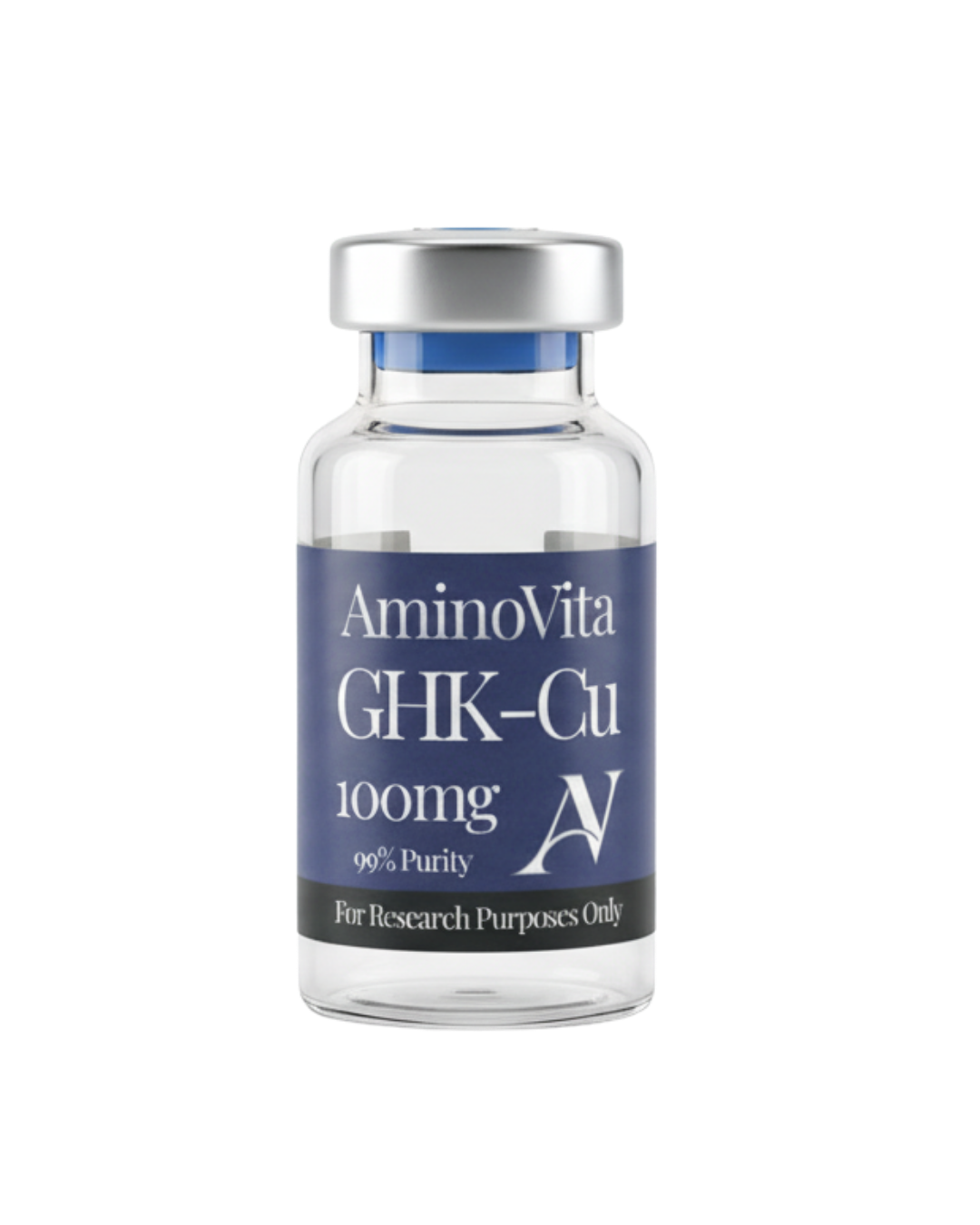
Bundle Contents
Copper tripeptide (Gly-His-Lys·Cu²⁺) investigated for its role in collagen synthesis, gene expression modulation, and dermal remodeling research.
$34.99 individualHydrolyzed bovine collagen comprising Type I & III peptides, providing structural amino acid substrate for dermal matrix research.
$44.99 individualEssential trace mineral serving as a cofactor for metalloproteinases and collagen cross-linking in connective tissue remodeling studies.
$27.99 individualMechanistic Rationale
The Dermal Architecture Stack was formulated around the convergent mechanisms governing extracellular matrix homeostasis. Copper-peptide signaling via GHK-Cu has been shown in published literature to promote fibroblast migration and upregulate collagen gene expression (COL1A1, COL3A1), while simultaneously modulating the expression of matrix metalloproteinases involved in tissue remodeling.
Hydrolyzed collagen provides the structural amino acid substrate — particularly glycine, proline, and hydroxyproline — required for de novo collagen biosynthesis within the dermal matrix. Type I and Type III collagen peptides have been identified as bioavailable precursors that may support fibroblast-mediated matrix deposition in experimental models.
Zinc serves as an essential cofactor for matrix metalloproteinases (MMPs), a family of zinc-dependent endopeptidases responsible for the regulated turnover and remodeling of collagen fibrils. Additionally, zinc participates in the enzymatic cross-linking of newly synthesized collagen, contributing to the structural integrity of the extracellular matrix. Together, these three compounds address complementary nodes within dermal biology: signaling, substrate provision, and enzymatic regulation.
Explore Further