
For in-vitro research use only · Not for human consumption · Not medical advice
The Gut Repair Peptide
A short protein fragment originally found in stomach juice that researchers study for its ability to speed up healing — especially in the gut, tendons, and ligaments.
Molecular Weight
1,419.53 Da
CAS Number
137525-51-0
Amino Acids
15 residues
In Plain English
Your stomach is one of the harshest environments in your body — acid, enzymes, constant mechanical stress. Yet it heals remarkably fast. Scientists wondered: what protects it? That question led to the discovery of BPC-157, a 15-amino-acid fragment isolated from human gastric juice.
Think of BPC-157 as your body's internal repair dispatcher. When tissue is damaged, this peptide appears to coordinate the healing response — calling in new blood vessels, calming inflammation, and directing growth factors to the injury site. It's studied not because it does something foreign to the body, but because it amplifies something the body already does.
The research interest extends well beyond the gut. In animal models, BPC-157 has been studied in the context of tendon and ligament repair, muscle healing, and even neurological protection. It's one of the most widely researched peptides in regenerative science.
What makes it particularly interesting to researchers is its stability. Unlike many peptides that break down instantly in stomach acid, BPC-157 remains active in the GI tract — which is rare and opens unique research avenues.
Plain English: BPC-157 is a small piece of a stomach protein that researchers study because it seems to tell damaged tissue — gut, tendon, ligament — to heal faster by building new blood vessels and calming inflammation.
How It Works
BPC-157 is studied for its ability to promote the formation of new blood vessels. More blood flow means more oxygen and nutrients reaching damaged tissue — the foundation of any repair process. Researchers have observed this effect in multiple tissue types.
The nitric oxide (NO) system is your body's inflammation thermostat. BPC-157 appears to interact with this system, helping to modulate the inflammatory response — turning it up when needed for healing and down when it becomes counterproductive.
BPC-157 is studied for its interactions with several growth factor pathways, including EGF, FGF, and VEGF receptors. These are the molecular "repair signals" that tell cells to multiply, migrate, and rebuild damaged structures.
Evidence
Gastric Protection
In multiple animal studies, BPC-157 demonstrated significant gastric cytoprotection — protecting stomach and intestinal lining from damage caused by NSAIDs, alcohol, and other stressors.
Takeaway: BPC-157 appears to help the gut lining resist damage and recover faster from injury — consistent with its origin in gastric juice.
Tendon Healing
Animal studies have shown BPC-157 to accelerate the healing of transected Achilles tendons and improve tendon-to-bone healing, with researchers observing increased collagen fiber organization and tensile strength.
Takeaway: The peptide appears to help tendons not just heal faster, but heal with better-organized tissue structure.
Vascular Repair
Research has demonstrated BPC-157's role in promoting angiogenesis. In models of severed blood vessels, the peptide was studied for its ability to rapidly form new connections and restore blood supply to damaged areas.
Takeaway: BPC-157's vascular effects may underlie many of its broader healing properties — tissue can only repair if it has blood supply.
Gut-Brain Axis
Emerging animal research suggests BPC-157 may have effects beyond the periphery, with studies examining its influence on dopaminergic and serotonergic pathways — linking gut health to brain function.
Takeaway: The gut-brain connection is real, and BPC-157 sits right at the intersection of digestive and neurological research.
Synergies
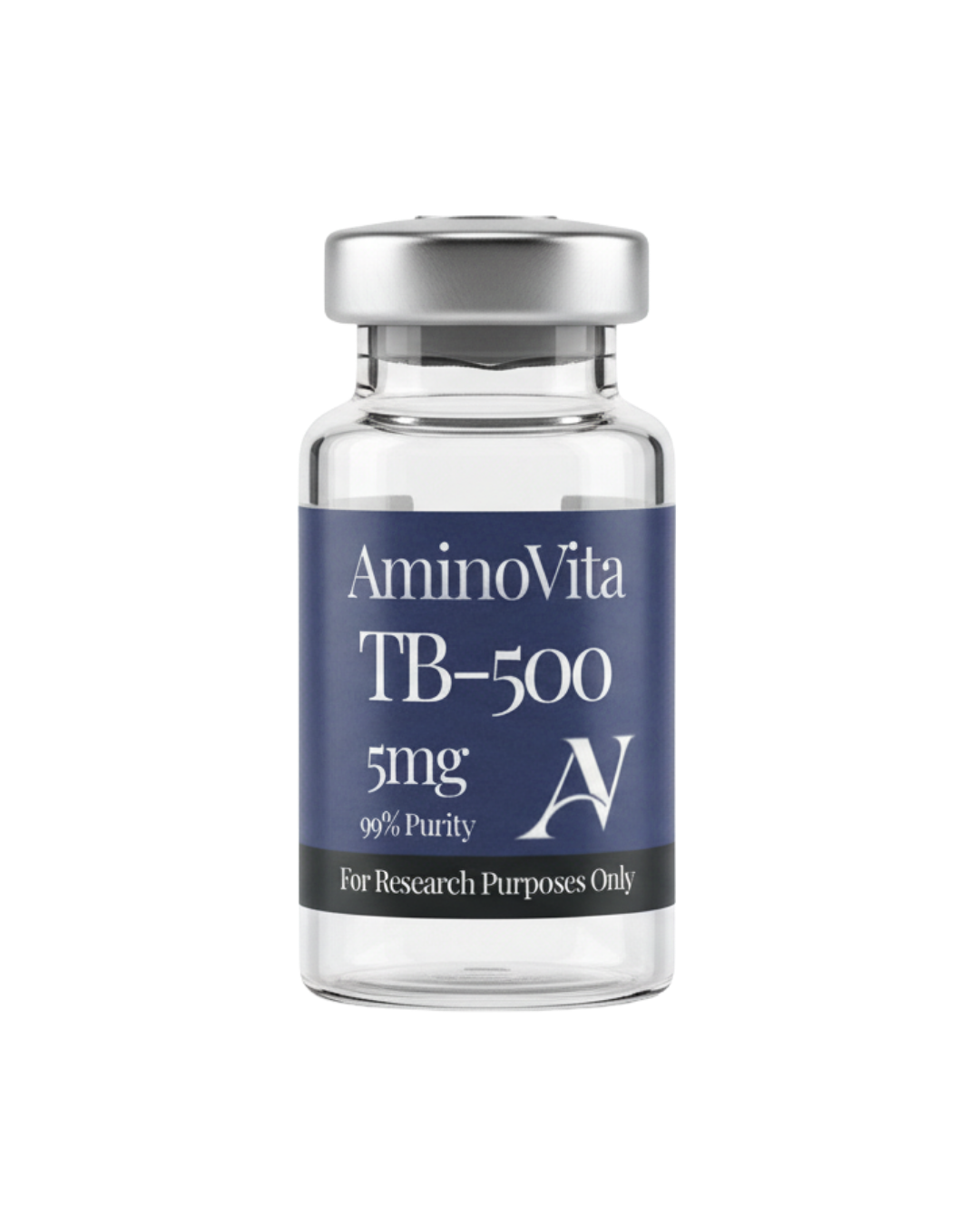
While BPC-157 builds new blood vessels, TB-500 helps cells migrate to injury sites. Together, they address both the supply route and the repair crew — the most-studied healing stack in peptide research.
View TB-500 →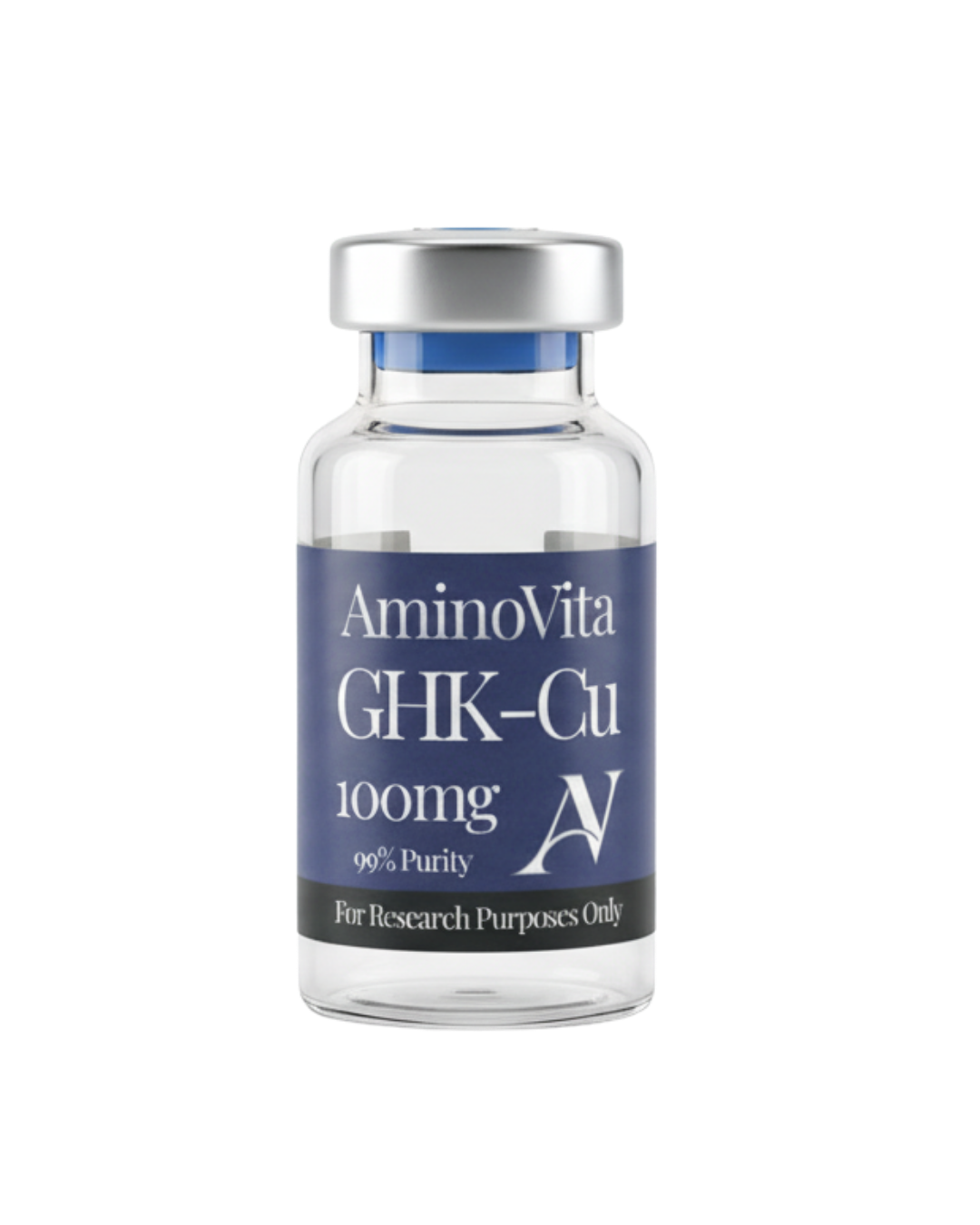
GHK-Cu upregulates collagen synthesis and ECM remodeling — providing the raw structural support that BPC-157's vascular and growth factor signaling helps coordinate. A tissue-rebuilding combination.
View GHK-Cu →The most abundant amino acid in the gut lining, L-Glutamine provides the raw fuel intestinal cells need to repair. Pairing it with BPC-157's signaling effects addresses both the message and the material.
Browse Compounds →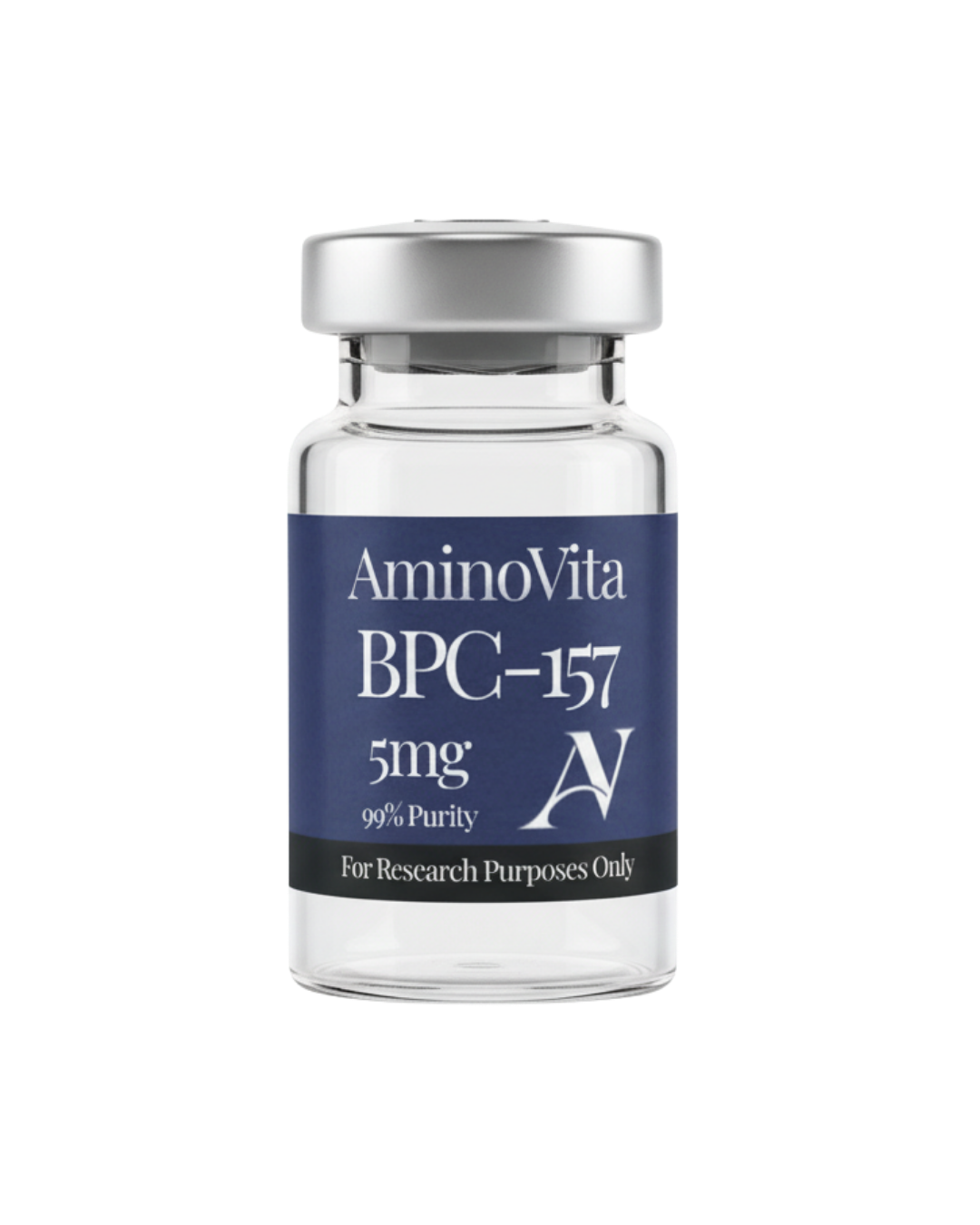
AminoVita Research Compound
$44.99
99%+ purity · Third-party tested · 5 mg
View ProductSubscribe & Save 10% — Free shipping on every order
Further Reading
Mechanism Deep Dive
A detailed look at how BPC-157 interacts with the gastric mucosa, NO system, and prostaglandin pathways to protect and repair the gut lining.
Wellness Science
Why your gut microbiome might be influencing your mood and cognitive clarity — and what the research says about the gut-brain axis.
FAQ
BPC-157 is a partial sequence of a protein called Body Protection Compound, which is naturally found in human gastric juice. The "157" refers to its 15-amino-acid sequence. It's synthesized in the lab for research purposes — it's not extracted from human tissue.
Because its primary mechanisms — angiogenesis and growth factor signaling — are universal repair processes. Every tissue in your body needs blood vessels and growth factors to heal. That's why researchers have studied BPC-157 in the context of gut, tendon, muscle, bone, and even neurological tissue.
Its stability is remarkable. Most peptides are rapidly degraded in the acidic environment of the stomach, which is why they're typically studied via injection. BPC-157 appears to remain stable in gastric fluid — making sense given that it originates there. This stability is a key reason it attracts so much research interest.
Yes and no. The parent protein (Body Protection Compound) is naturally present in human gastric juice. BPC-157 is a specific 15-amino-acid fragment of that protein, synthesized in the lab. So while it's based on a natural sequence, the research compound itself is produced synthetically for consistency and purity.
They address complementary aspects of tissue repair. BPC-157 is primarily studied for angiogenesis (building blood supply) and growth factor modulation, while TB-500 is studied for cell migration and actin regulation (helping repair cells physically reach the injury). Together, they cover the "logistics" of healing from multiple angles.
Not sure where to start? Browse compounds by research goal and find the right combination for your objectives.
Browse Catalog